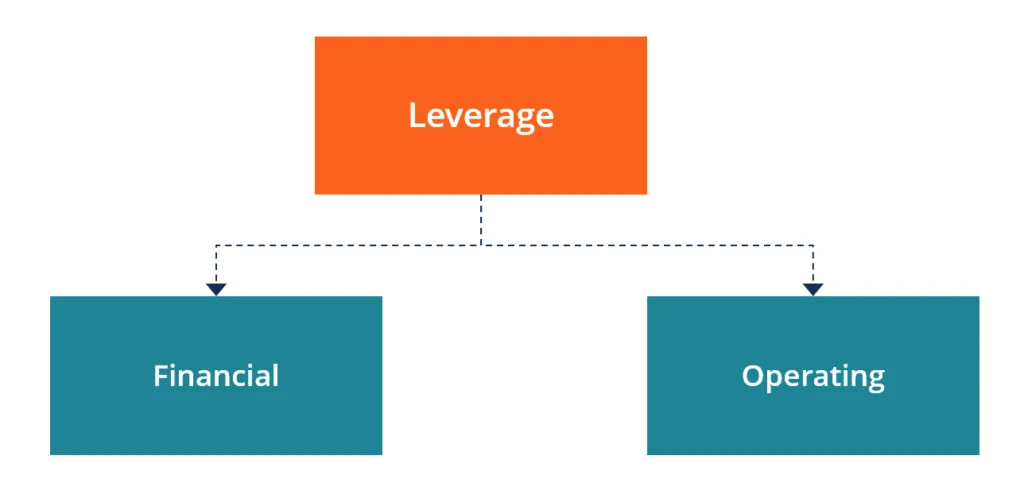
Leverage in Financial Analysis
Leverage in financial analysis refers to the effect of a change in one financial variable (such as sales) on another (such as earnings). It measures sensitivity and risk-return trade-offs in business decisions.
Common variables affected by leverage include:
- Costs
- Output
- Sales Revenue
- Earnings Before Interest and Taxes (EBIT)
- Earnings Per Share (EPS)
When we calculate how much one variable (Y) changes in response to another variable (X), we are measuring leverage of Y with respect to X.
Leverage = (% Change in Y) / (% Change in X)
Types of Leverage
1. Operating Leverage
Operating leverage refers to the degree to which a company uses fixed operating costs. Higher operating leverage means higher potential gains and risks from changes in sales.
2. Financial Leverage
Financial leverage arises from the use of fixed-cost financial instruments (like debt). It measures how sensitive EPS is to changes in EBIT.
3. Combined Leverage
Combined leverage takes both operating and financial leverage into account. It shows the sensitivity of EPS to changes in sales.
or DCL = DOL × DFL
Implications of High Leverage
- Higher leverage magnifies both profits and losses.
- It increases the volatility of returns for shareholders.
- Highly leveraged firms face greater financial risk during downturns.
- Balanced leverage helps in optimizing returns with manageable risk.
Conclusion
Leverage is a powerful financial tool used by businesses to magnify potential returns. However, it must be used with caution, as it also amplifies the risk. A careful analysis of operating and financial leverage is crucial for strategic financial planning and risk management.