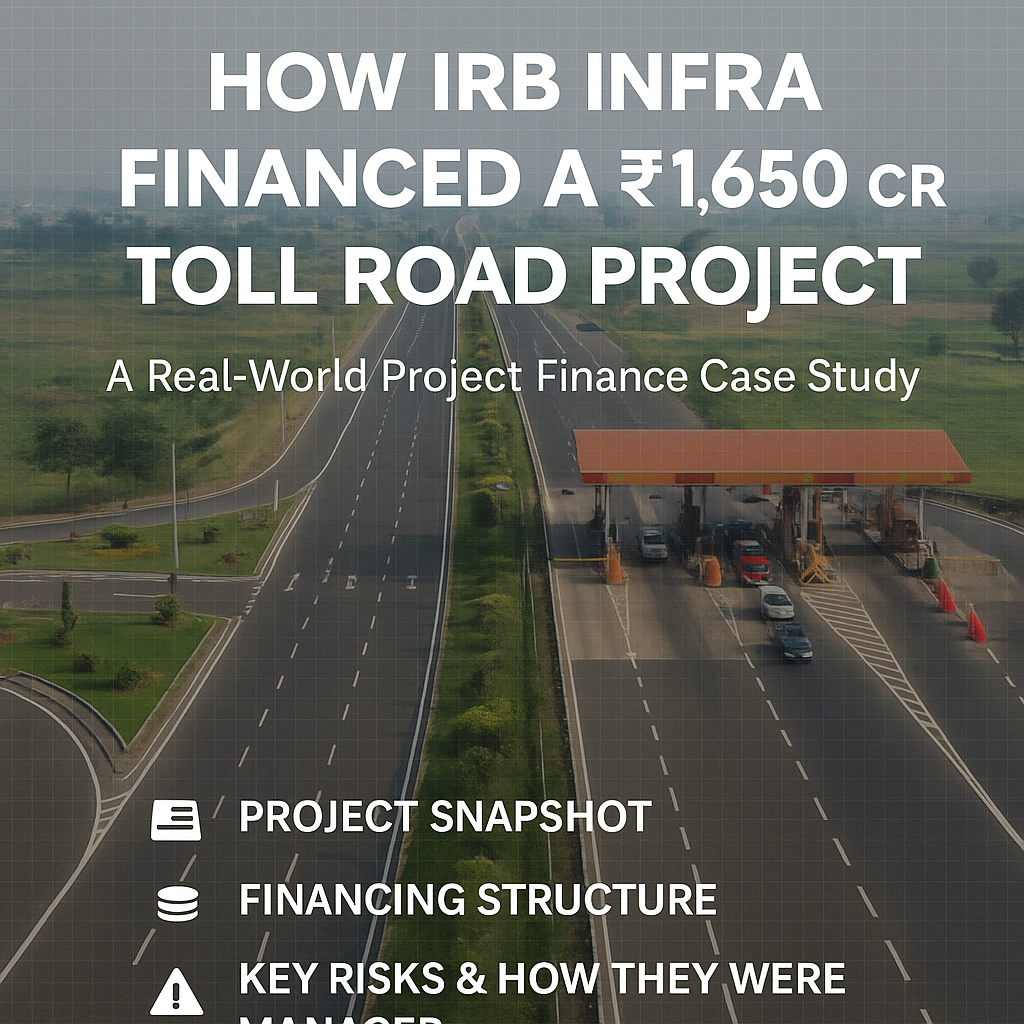
IRB Infrastructure Developers Ltd was awarded a major Build-Operate-Transfer (BOT) highway concession by the National Highways Authority of India (NHAI). The project involved constructing and operating a ~100 km toll road in Maharashtra
Under the contract:
-
IRB would construct the highway
-
Operate it for 25 years
-
Recover the investment by collecting toll revenue
This public-private partnership was a classic example of how long-gestation infra projects are financed and structured using project finance principles
Financing Structure:
The project cost was estimated at ₹1,650 crore.
| Component | Value | Share |
|---|---|---|
| Debt | ₹1,200 crore | ~73% |
| Equity | ₹450 crore | ~27% |
| Total | ₹1,650 crore | 100% |
Lending Consortium: SBI (lead banker) + other PSU and private banks
Loan Tenure: ~15 years
Repayment Mode: Semi-annual, from projected toll cash flows
Key covenants included:
-
DSCR requirement: 1.2x minimum
-
Escrow Account: All toll revenue routed through bank-monitored escrow
-
Toll Collection Rights: Assigned as security to lenders
-
Cash Shortfall Reserve: Buffer to protect repayment during low traffic periods
Key Risks & Mitigation:
| Risk | Mitigation Strategy |
|---|---|
| Land acquisition delays | NHAI ensured 80% land readiness before awarding contract |
| Traffic overestimation | Independent traffic consultant reports + conservative estimates |
| Construction delays | IRB’s in-house EPC arm handled construction — tight control |
| Cash flow volatility | Structured repayment with toll-linked triggers and DSCR buffers |
Lenders didn’t just fund the project based on returns — they evaluated repayment security and structural safeguards.
They saw:
-
Stable project economics from a busy highway corridor
-
Strong promoter experience (IRB had prior toll road successes)
-
Viable traffic estimates based on third-party reports
-
Security in the form of:
-
Full escrow of toll revenue
-
Step-in rights in case of default
-
Contingency reserves
-
Transparent regulatory oversight via NHAI
-
Lessons for Young Analysts:
This case study shows how infrastructure finance goes beyond just project cost and IRR:
1. DSCR (Debt Service Coverage Ratio) is key — lenders need predictable repayment
2. Risk buffers and covenants matter more than flashy returns
3. Traffic assumptions should be conservative and backed by evidence
4. Lenders prefer sponsors who have execution history + financial skin in the game
Summary
IRB’s toll road shows how Indian infra projects are structured with precision to handle long-term risk and repayment — and how financial engineering makes ambitious infrastructure a reality.
For any aspiring infra banker or DFI analyst, this project is a goldmine of insights.