Understanding FEDAI: Basics You Should Know
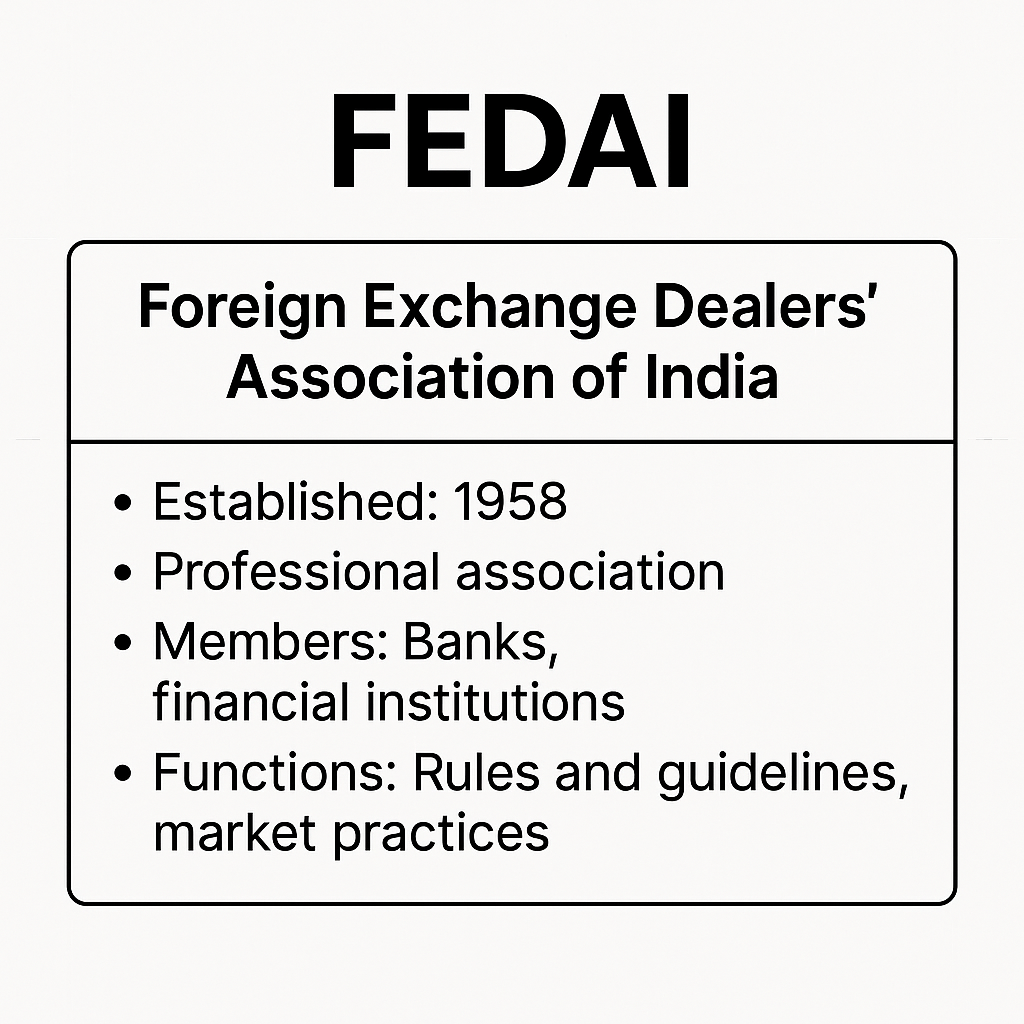
The Foreign Exchange Dealers’ Association of India (FEDAI) was established in 1958 as an association of banks that deal in foreign exchange in India. Its main objective is to streamline forex operations and promote uniform practices among Authorized Dealers. FEDAI works closely with the Reserve Bank of India (RBI) and plays a critical role in India’s foreign exchange ecosystem.
Key Objectives of FEDAI
- Standardize rules and procedures for foreign exchange transactions.
- Ensure transparency and consistency in currency exchange rates, service charges, and commission structures.
- Promote ethical conduct and discipline among forex dealers.
- Act as an intermediary between RBI and member banks for policy dissemination and feedback.
- Organize training programs, workshops, and certifications in foreign exchange management.
Who Are FEDAI Members?
FEDAI’s members primarily include banks in India that are authorized by the RBI to handle foreign exchange transactions (Authorised Dealers – Category I). These members are required to follow all operational rules and circulars issued by FEDAI.
Why FEDAI Matters in Forex Markets
In a complex and fast-paced global financial environment, FEDAI provides much-needed structure and consistency in how forex transactions are executed in India. From determining exchange rates to guiding banks on compliance matters, it helps reduce ambiguity and fosters trust among stakeholders such as:
- Importers and Exporters
- Corporates handling cross-border payments
- Travelers dealing with currency exchange
- Foreign investors and remittance recipients
Popular FEDAI Guidelines Include:
- Exchange rate display norms and card rate thresholds
- Market hours and timing for forex transactions
- Rules for crystallisation of unpaid export/import bills
- Compensation policies for delays and exchange losses
- Code of Conduct for all Authorised Dealers
FEDAI and the FX Global Code
FEDAI encourages its members to adopt the FX Global Code, an international code of conduct that promotes integrity, transparency, and best practices in the foreign exchange market. Members are expected to submit an annual Statement of Commitment to this Code, reinforcing India’s alignment with global standards.
Conclusion
FEDAI is a cornerstone institution in India’s financial landscape, particularly in the domain of foreign exchange. By promoting uniformity, accountability, and education, it ensures that Indian forex markets operate smoothly and fairly for all participants.
To learn more or access official circulars and updates, visit: www.fedai.org.in