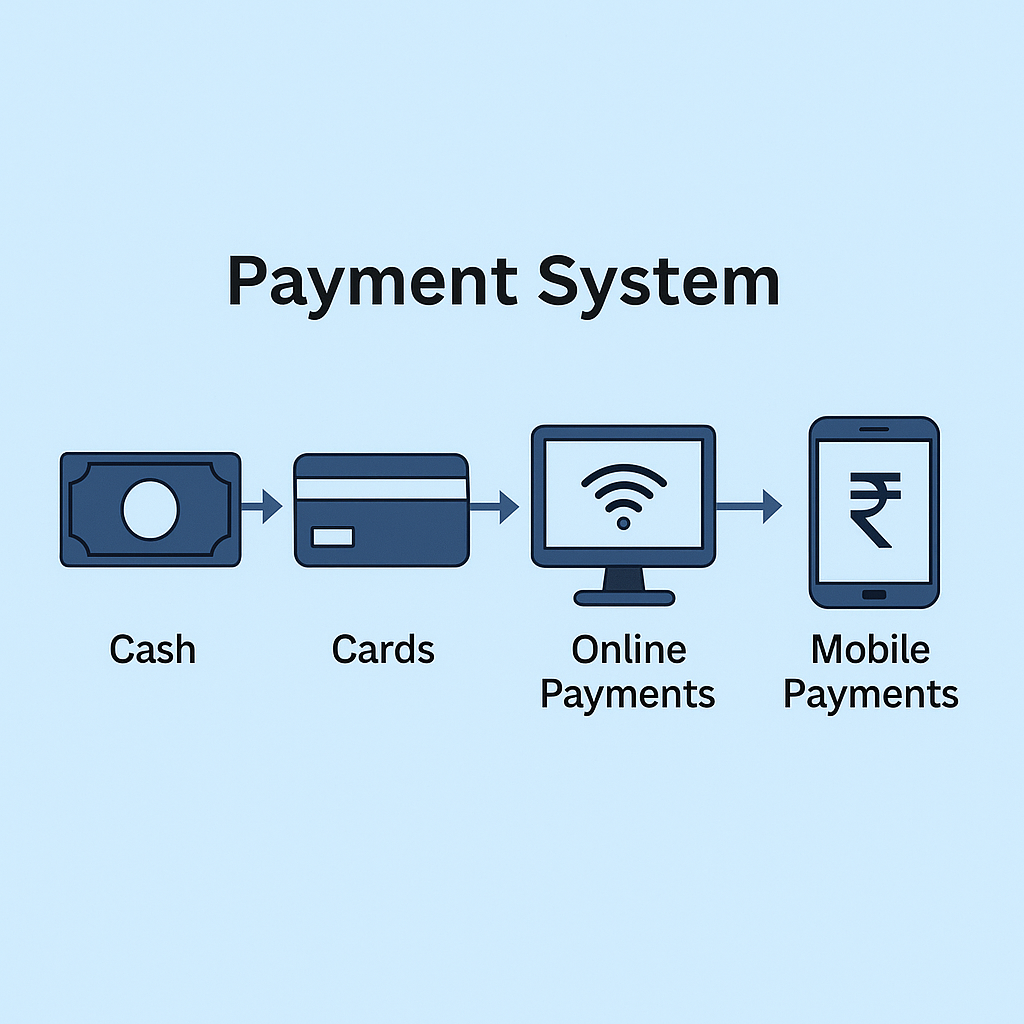
Indian Payment Systems Overview
Prepaid Payment Instruments (PPIs)
PPIs are instruments that store monetary value and can be used to purchase goods, services, or transfer funds. These are regulated by the Reserve Bank of India (RBI) under the Payment and Settlement Systems Act, 2007.
Types of PPIs:
- Small PPIs: Issued with minimum customer details. Usable only for purchasing goods and services from merchant partners. Not valid for fund transfers or withdrawals.
- Full-KYC PPIs: Issued after completing full Know Your Customer (KYC) process. Can be used for purchases, fund transfers, and cash withdrawals.
AePS – Aadhaar Enabled Payment System
AePS is a bank-led payment system developed by NPCI and regulated by RBI. It allows banking transactions using Aadhaar authentication at Micro ATMs through Banking Correspondents.
Available Services:
- Cash Withdrawal
- Cash Deposit
- Balance Enquiry
- Mini Statement
- Aadhaar to Aadhaar Fund Transfer
- Authentication
- BHIM Aadhaar Pay
Cost to Customer: NIL
NPCI Limits: ₹10,000 per AEPS transaction. Cumulative limit for AEPS + BHIM Aadhaar Pay is ₹50,000 per month.
APBS – Aadhaar Payment Bridge System
APBS enables government agencies to directly transfer benefits and subsidies to Aadhaar-seeded bank accounts under the Direct Benefit Transfer (DBT) scheme.
The system uses an Institution Identification Number (IIN), a 6-digit code issued by NPCI to participating banks, to route payments securely and efficiently.
IMPS – Immediate Payment Service
IMPS is a robust, real-time, interbank electronic fund transfer system available 24×7. It was launched by NPCI and is supervised by the Reserve Bank of India.
Key Features:
- Instant fund transfer through mobile, internet banking, SMS, ATM, or USSD
- Real-time credit to the beneficiary
Pre-Requisites:
- Remitter: Registration, MMID, and MPIN
- Beneficiary: MMID and Mobile Number or Account Number + IFSC
MMID: Mobile Money Identifier — a 7-digit unique code linked to a mobile number and bank account.
NACH – National Automated Clearing House
NACH is a centralised system launched by NPCI to facilitate high-volume, low-value, recurring payments such as salaries, pensions, EMIs, utility bills, and subsidies.
Types of Transactions:
- NACH Credit: For making bulk credits like salaries, pensions, DBT, dividends, etc.
- NACH Debit: For collecting payments such as EMIs, insurance premiums, utility bills, etc.
Mandates:
- Customers authorize banks via electronic or physical mandate
- eMandates can be created using 2-factor authentication
- Maximum mandate duration: 30 years
Debit Limit: ₹1 crore per transaction (for NACH Debit)
eMandate Limit (2FA): ₹15,000 per transaction
2FA Includes: Aadhaar/PAN/Customer ID and OTP on registered mobile number
Regulatory Oversight by RBI
The Reserve Bank of India (RBI) plays a central role in regulating and supervising all payment systems in India under the Payment and Settlement Systems Act, 2007.
- Licensing and regulating payment service providers (banks and non-banks)
- Framing operational rules and ensuring compliance
- Promoting innovation and secure digital payment methods
- Collaborating with NPCI for digital infrastructure development