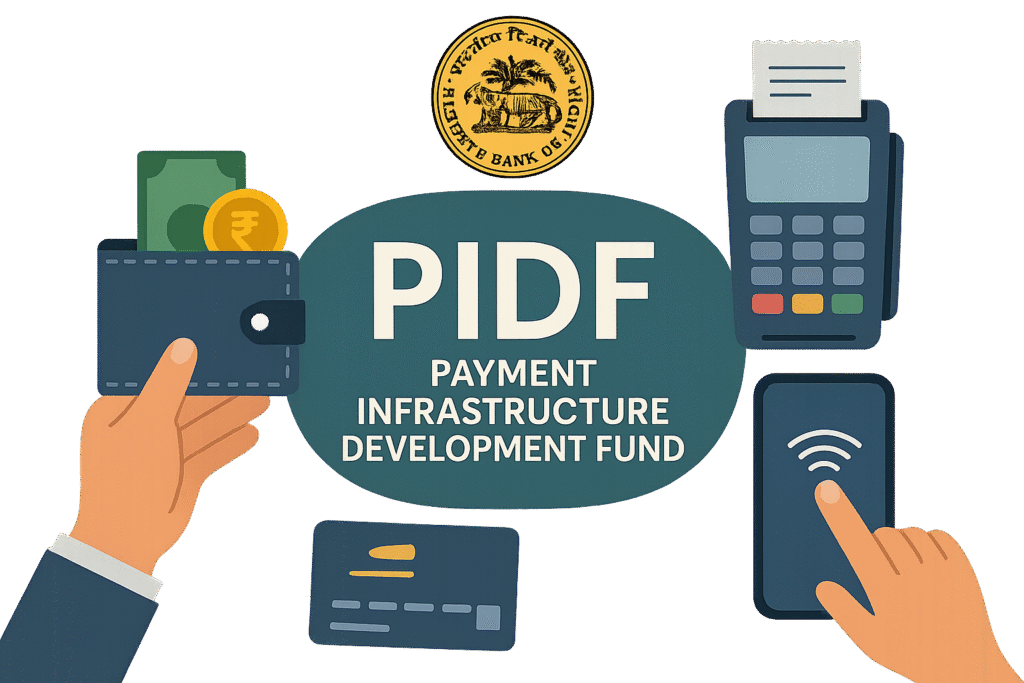
Payment Infrastructure Development Fund
The Payment Infrastructure Development Fund (PIDF) was launched by the Reserve Bank of India (RBI) in January 2021. It aims to give a strategic boost to digital payments by incentivizing the deployment of physical and digital payment acceptance infrastructure in underbanked and rural areas across India. The scheme complements the RBI’s goal of a less-cash and financially inclusive economy.
Why PIDF Was Introduced
Although digital payments were growing rapidly in urban India, rural areas lagged behind due to lack of infrastructure, awareness, and merchant support. The cost of deploying PoS devices and maintaining them in remote areas was high, and service providers lacked motivation without incentives. PIDF was introduced to bridge this digital divide.
Core Objectives
- Encourage wider acceptance of digital payments in rural and semi-urban markets
- Subsidize acquiring institutions for deploying acceptance devices in low-income regions
- Support Digital India and financial inclusion initiatives
- Reduce dependency on cash in daily transactions
- Enhance the security and traceability of payments
Initial Corpus
- RBI contribution: ₹250 crore
- Card Networks (Visa, Mastercard, NPCI, RuPay): ₹95 crore
- Total initial fund corpus: ₹345 crore
- The fund is maintained by RBI and replenished as needed
Eligible Acceptance Devices
- Physical Point-of-Sale (PoS) Terminals
- Mobile PoS (mPoS) Devices
- GPRS-based PoS Devices
- Biometric Payment Devices (e.g., Aadhaar-enabled)
- Interoperable QR Codes (UPI QR, Bharat QR)
- Sound Box Devices (for UPI confirmation)
Geographic Coverage
Focus areas under PIDF include:
- Tier-3 to Tier-6 cities as per census categorization
- North Eastern states (including Sikkim)
- Aspirational districts identified by NITI Aayog
- Hilly and tribal regions, border towns, islands
How Does PIDF Work?
The fund operates on a reimbursement model:
- Acquirers (banks, fintechs) deploy devices in eligible areas
- They report deployment with geotagged data to RBI
- Subsidy is disbursed based on performance metrics like transaction volume and continuity of usage
- Devices must remain active for at least 1 year to qualify for full subsidy
Performance Metrics
Incentives under PIDF are linked to:
- Successful onboarding and KYC of merchants
- Minimum transaction activity on deployed devices
- Regular usage reports submitted to RBI
- Adherence to technical and security standards
Benefits of PIDF
- Reduces the cost burden for digital payment infrastructure providers
- Empowers kirana stores, traders, and small merchants to accept digital payments
- Boosts digital literacy and awareness at the grassroots level
- Creates jobs for onboarding agents and support staff
- Contributes to a transparent and traceable economy
Stakeholders Involved
- RBI: Fund owner and regulator
- Acquirers: Banks and payment aggregators implementing device rollout
- Merchants: End-users of the payment infrastructure
- NPCI: Provides technical rails and reporting framework
- Card Networks: Funding partners and infrastructure providers
Challenges in Execution
- Power and connectivity issues in remote regions
- Low digital literacy among merchants and customers
- Resistance to adopting digital payments over cash
- Device maintenance and fraud prevention issues
Recent Updates and Extension
- RBI extended the PIDF scheme until December 2025
- Increased focus on including offline solutions like cardless PoS and Aadhaar-enabled payments
- Integration with PM Vishwakarma scheme to empower rural artisans
- Subsidies revised to offer higher support in tribal and border regions
Success Stories
- More than 10,000 merchants in Mizoram and Nagaland enabled with QR codes within 6 months of launch
- PoS terminals deployed in ration shops in Chhattisgarh and Odisha, replacing manual registers
- Rural haats in Bihar and Jharkhand introduced UPI Sound Boxes to enable tap-and-pay
Future Outlook
As India pushes toward a Digital Public Infrastructure (DPI) model, PIDF will continue to play a crucial role in ensuring no region is left behind. Its success is expected to inspire similar public-private funding models for digital transformation in other sectors like health, education, and agriculture.
Conclusion
The PIDF scheme is a powerful initiative by the RBI to accelerate the adoption of digital payments across all regions of India. By removing financial barriers for acquirers and enabling merchants to participate in the digital economy, PIDF strengthens India’s journey toward inclusive growth, transparency, and digital empowerment.
For more information, visit the RBI Official Website or download the full PIDF Scheme Notification.